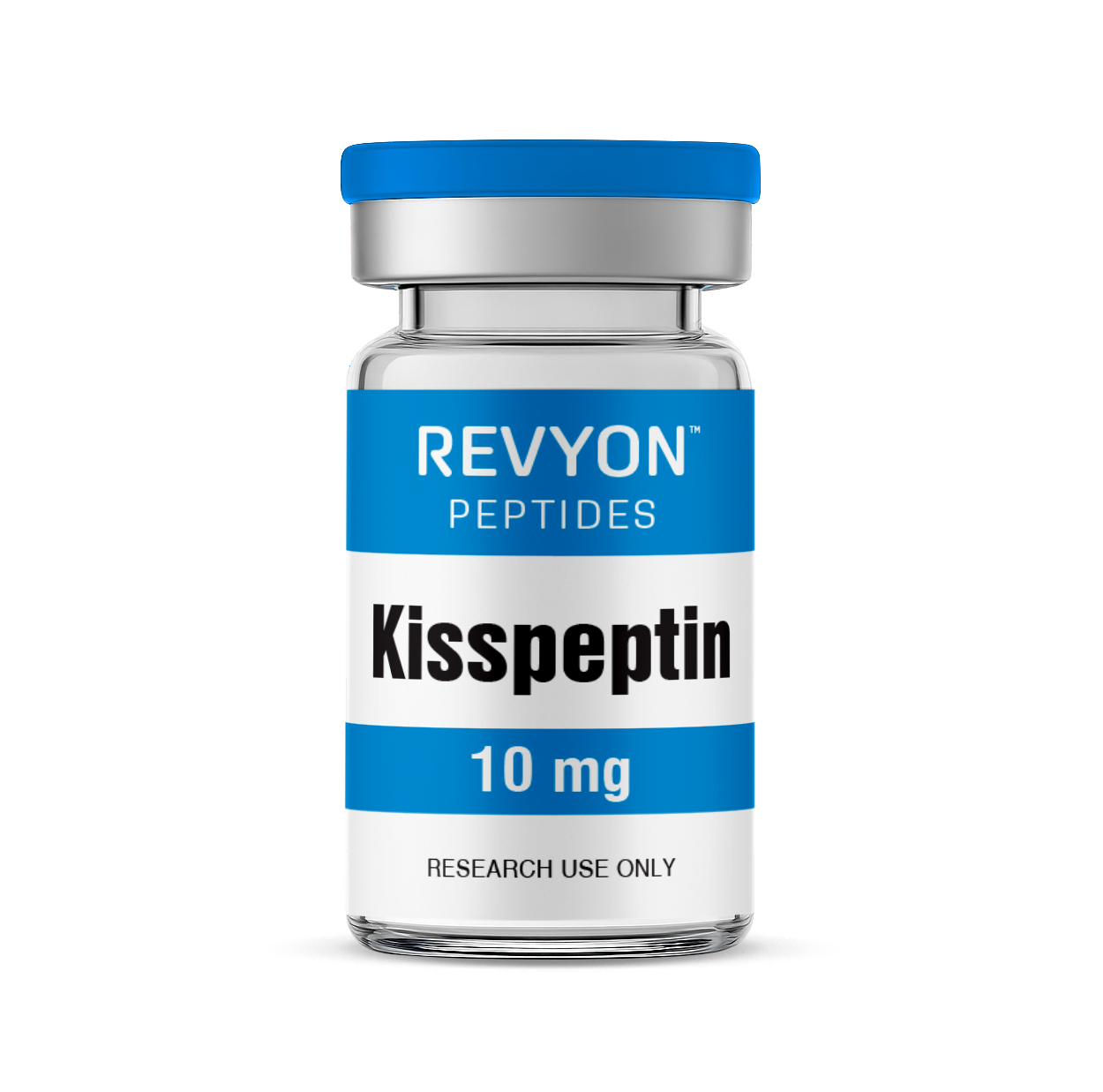

Kisspeptin is a synthetic peptide modeled after the naturally occurring Kiss1-derived peptides that play a critical regulatory role in reproductive hormone signaling.
GPR54 Agonist / Reproductive Axis Modulator / Neuroendocrine Research Peptide
Kisspeptin is a synthetic peptide modeled after the naturally occurring Kiss1-derived peptides that play a critical regulatory role in reproductive hormone signaling. It is widely studied for its influence on gonadotropin-releasing hormone (GnRH) secretion, hypothalamic–pituitary–gonadal (HPG) axis function, and neuroendocrine communication involved in fertility and maturation.
Kisspeptin supports research into reproductive biology, neuroendocrine regulation, and hormonal coordination, making it a cornerstone peptide in studies of hypothalamic signaling and endocrine system activation.
RESEARCH
Kisspeptin is a laboratory-engineered peptide designed to activate GPR54 (Kiss1R), a key receptor involved in controlling GnRH release within the hypothalamus.
Its discovery and characterization have significantly advanced the understanding of puberty onset, fertility regulation, and hormone-driven reproductive pathways.
Provided in lyophilized form, Kisspeptin (10 mg) is intended exclusively for controlled in vitro research focused on reproductive endocrinology, hypothalamic signaling cascades, and neurohormonal regulatory mechanisms.
Chemical Information:
Molecular Formula: Varies based on specific Kisspeptin fragment
Common Research Fragment: Kisspeptin-10
Molecular Weight: ~1300–1500 g/mol (depending on the analog)
Sequence (Kisspeptin-10): Tyr-Asn-Trp-Asn-Ser-Phe-Gly-Leu-Arg-Phe-NH₂
Structure: Short-chain peptide fragment derived from Kiss1 precursor
Description:
Kisspeptin is a synthetic research peptide provided exclusively for qualified laboratory use.
This compound is intended solely for non-clinical, in vitro research related to reproductive hormone signaling, neuroendocrine pathways, and cellular communication studies.
Supplied as a lyophilized powder, Kisspeptin is suitable for biochemical assays, receptor activation studies, and cellular modeling of GnRH-related processes.
No claims regarding biological activity, therapeutic benefit, or clinical outcomes are made or implied.
Research Applications:
Reproductive Axis Activation Studies
Investigate Kisspeptin’s role in stimulating GnRH secretion and supporting HPG-axis signaling.
Puberty Onset & Maturation Research
Examine gene expression and hormonal pathways involved in reproductive development.
Fertility and Gonadotropin Signaling Models
Study effects on LH and FSH release through GnRH modulation in experimental systems.
Neuroendocrine Communication Pathways
Explore interactions between hypothalamic neurons and hormone-producing endocrine tissues.
Hormonal Rhythm & Feedback Loop Analysis
Assess Kisspeptin’s involvement in feedback mechanisms integrating sex steroids and GnRH output.
Storage and Handling:
Product Specifications:
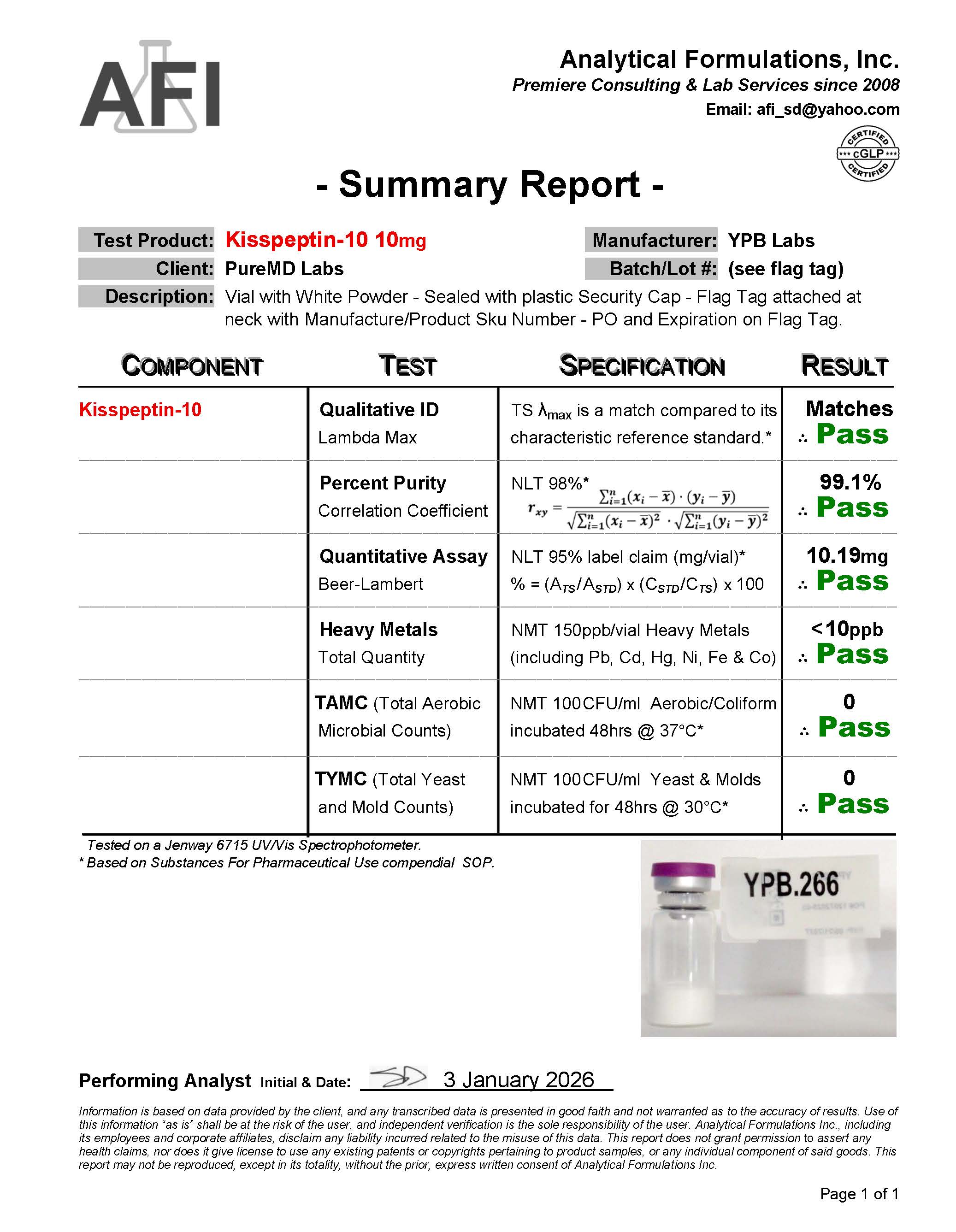
Purity: ≥99% (HPLC Certified)
Appearance: Lyophilized white to off-white powder
Solubility: Soluble in bacteriostatic water
Form: 10 mg vial
Compliance Notice:
Kisspeptin is FOR RESEARCH USE ONLY.
It is not intended for human or veterinary use.
This product has not been evaluated by the FDA.
Misuse of this material may violate federal, state, or local regulations.
By purchasing this peptide, the buyer affirms that it will be used solely for in vitro scientific research.
Key Research Features:
Mechanism of Action (Simplified):
Applications / Possible Uses:
Form / Notes: